
I have over a hundred and thirty English language books on Japanese cuisine on my bookshelves, and yet I feel I’ve only begun to skim the surface. In the past few years, there have been scores of Japanese cookbooks, Asian fusion cookbooks, you name them, published around the world. It is hard to keep up!
Below are just a few of my favorites, essential volumes you can use to establish your ideal Japanese library. Although many were published years ago, they can be found fairly easily these days, especially in the United States and Japan, thanks to the internet! And don’t despair, I will return to this topic again and again and cover other
favorites, as I am adding new ones! I would love to hear what your favorites are as well—please comment below and share.

1. The first book I’d recommend is
Japanese Cooking: A Simple Art By Shizuo Tsuji, which is often considered the bible of Japanese cuisine. Originally published in 1980 by Kodansha International, it has gone through several reprints. I find I constantly to this day refer to this volume. I call it my ‘go to’ Japanese cookbook. The recipes are clearly written and easy to follow, and the black-and-white drawings showing special techniques are always helpful and what you end up producing tastes very good. Tsuji introduces each recipe with a little historical nugget or comment that helps give the reader a sense of where the dish fits in culinarily-speaking. Everything is covered, from how to make
dashi (the primary Japanese fish stock) to utensils to seasonal dishes, and even a few sweets (often the hardest type of recipe to find in English cookbooks).
2. Another book I find myself often referring to, not only because of the recipes but because of the author’s observations of life as a foreign wife in Japan in the late sixties, is
Joan Itoh’s Rice Paddy Gourmet. Originally published in 1976 by The Japan Times, the book is a compilation of cooking columns that Itoh wrote for that newspaper in the seventies while she lived in the rice-growing plains of Niigata Prefecture (the Far North as its called) in a gigantic traditional farm house. My copy is in disrepair, but I still love flipping through the pages and reading her quirky comments about seasonal events and her delicious blend of East-West recipes, which incorporated her background of (Milford, Pennsylvania) and her then-life in Japan. I had the pleasure of interviewing her years later in her then-new life in Brantford Ontario, Canada. Her stories and recipes continue to be relevant and tasty today. She was also sweet enough to replace my tattered copy as well!
3. We have Jame Udesky to thank for writing the definitive
The Book of Soba in 1988 by Kodansha International.
It remains my go-to book on all things soba (Japanese buckwheat pasta). The book has it all: from how to make handmade soba noodles, the history of soba, where to eat soba in Japan, and lots of recipes.
The very best soba I’ve ever had has always been at traditional handmade soba restaurants. They are always worth searching for and going to. My favorite soba recipe is
Toshikoshi Soba.
4.
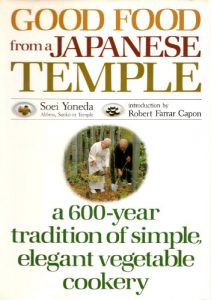
Shojin ryori, or vegetarian monk cuisine, is comprehensively covered in
Good Food from a Japanese Temple by Soei Yoneda, the late abbess of Sanko-in Temple. The book, came out in 1982. I had the pleasure of dining at Sanko-in years ago, and be served by the abbess, and also to conduct a lively and engrossing interview with her. I have yet to meet any chef in his or her eighties (or otherwise) who rivaled Yoneda’s enthusiasm and knowledge of, this style of cooking. One of the original dishes of Sanko-in Temple is
robai–fried fresh wheat gluten served with a pungent and fiery mustard-soy sauce. I’ve never forgotten it, and the recipe appears in her book as well. Yoneda was truly a character. She entered Donke-in nunnery in Kyoto at the age of four, and took her Buddhist vows at seven. She was appointed the abbess of Sanko-in Temple from the age of thirty-one until her death.

5.
At Home with Japanese Cooking by Elizabeth Andoh, is one of her earlier works. Any of her cookbooks are a joy to read, cook from and are beautifully presented.
I have had the pleasure of interviewing Elizabeth for my original newsletter,
Gochiso-sama! and we have stayed in touch intermittently ever since. I will no doubt talk with her again about her recent activities. She has been a treasure in the Japanese cuisine world for over 40 years. She has written many books; another favorite of mine written by her is
An Ocean of Flavor: the Japanese Way with Fish and Seafood.
6.
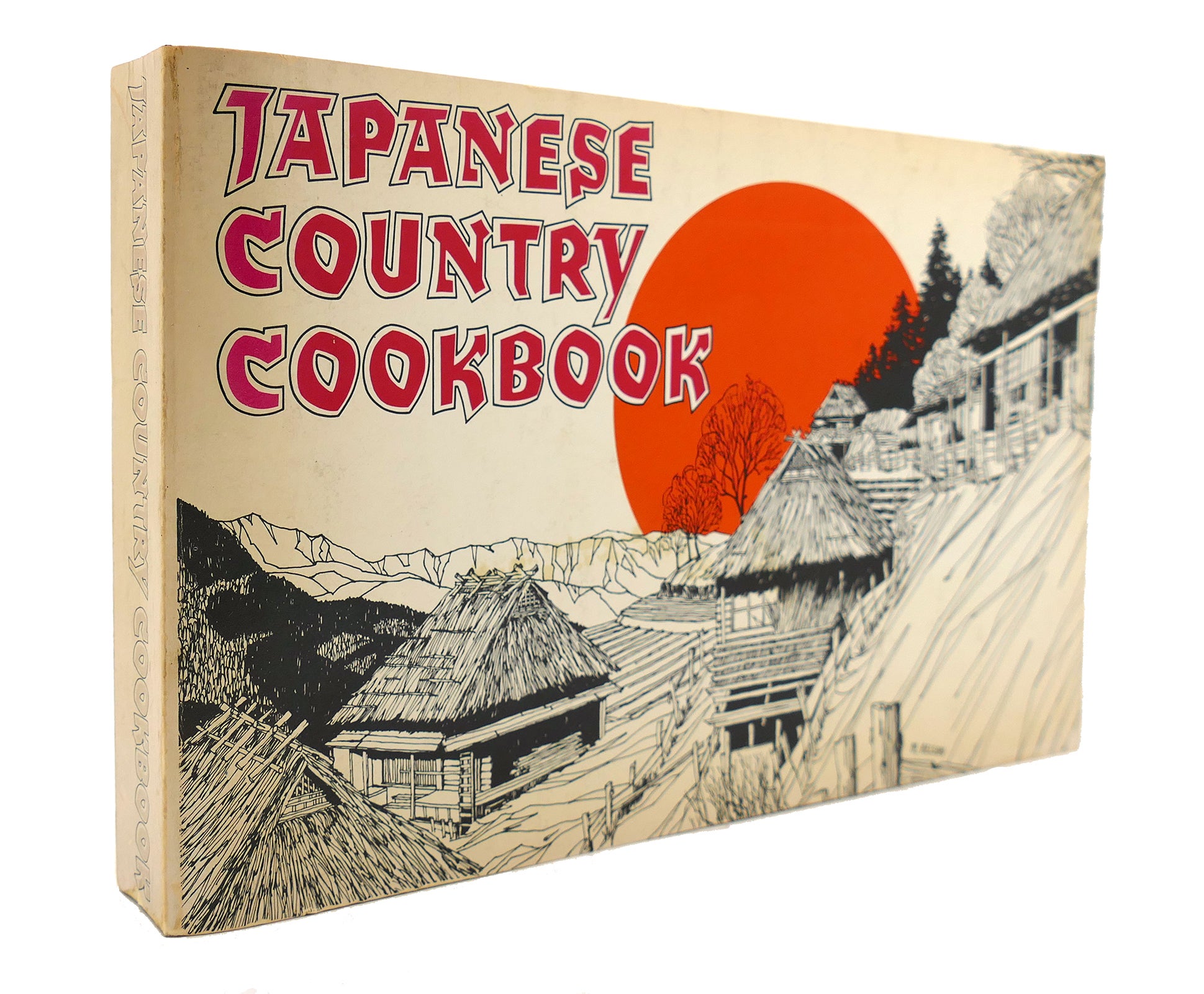
Japanese Country Cookbook by Russ Rudzinski are a collection of recipes from a San Francisco restaurant, now sadly closed, called
Mingei-ya. A sentimental favorite, as I have many happy memories of visiting this country-style Japanese restaurant as a child and tasting my first chicken
mizutaki. Many of my favorite homestyle Japanese recipes are in this beautifully printed paperback by Nitty Gritty Books. A real gem!
7. I finally replaced my tattered copy of
Masaru Doi’s One-pot Cookery. I use this book all the time, especially since last year I also finally bought a portable tabletop stove burner to cook
nabemonos (one-pot dishes) tableside.
I continue to get inspiration from his book and one of my favorite recipes remains Falling Leaf Chicken Nabe, which uses ground chicken.

8. My niece, Corina Seligman, who used to sell sake for a living at
Empire Merchants introduced me to
Sake Confidential and to John Gauntner, who is the only non-Japanese certified Master of Sake Tasting, who is based in Japan.
Highly recommend for beginners and experienced sake lovers alike! It’s a fun and very informative read! I even learned some new sake information and enjoyed his witty writing style. It’s refreshing to find an expert who doesn’t take himself too seriously.
If you like Sake, I encourage you to also check out Corina’s guest posts:
Sake Paired with Whaaat? and
Japanese Inspired Cocktails
9.
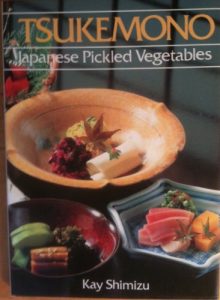
Tsukemono: Japanese Pickled Vegetables by Kay Shimizu is a good addition to your library. I love pickles—I blame it on my Dad. He taught me how to make kosher dill pickles as a girl, and I’ve been making and eating them ever since. I just can’t finish a bowl of Japanese white rice without them.
This book with guide you through the process of pickling a wide variety of Japanese vegetables easily and happily.
Be sure to check out her recipes for Cabbage
Shoyu-zuke and Pickled Plums (
Umeboshi), my go-to-food to eat for an upset stomach.
10.
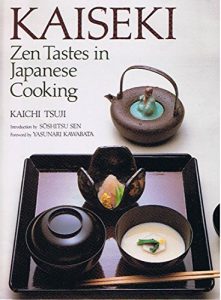
Kaiseki: Zen Tastes in Japanese Cooking by Kaichi Tsuji. Kaiseki is the haute cuisine of Japanese cooking and this is not for the beginning cook by any means.
The photographs are exquisite, and the text is a serious look at kaiseki’s hidden meanings and preciseness of its preparation.
Please note that a knowledge of Japanese cooking is necessary to follow Tsuji’s recipes–most of which don’t have any measurements.
Bonus! My own Osechi e-cookbook

“
The Wonderful World of Osechi: Japanese New Year’s Recipes” is full of recipes that are fast to make, healthy, easy, and very delicious for your New Year celebrations along with an understanding of the Shogatsu (Japanese New Year) traditions. It’s now available in both print and Kindle editions! Why not try something different this year for your New Year’s celebrations?
Note: These are truly my favorite Japanese Cookbooks. However, the links may include affiliate links, so without costing you anything extra, I’ll earn a small percentage of the sales if you purchase these items through these links. Thank you for your support!

Leave a note in the comments section (see below) about your favorite Japanese cookbook!

 The Book of Soba